
Setting up Practice
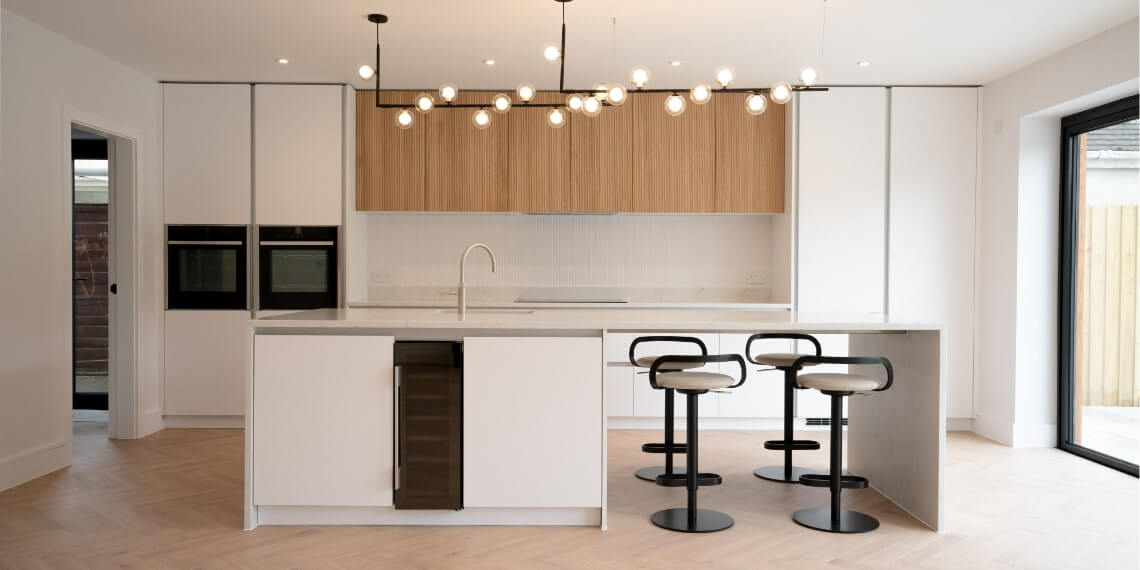
Home renovations are exciting projects. However, whether you have an idea of what you want or not, the prospect of designing and project managing a home renovation can feel daunting. You might be thinking about hiring an architect to help, but as part of this thought, you will likely be questioning, “Why use an architect for my home renovation?”
Hiring an architect brings numerous benefits, from expertise and experience to custom designs and project management and coordination.
At Studio Arkell, we are an architect’s practice in Christchurch, Dorset, providing full architectural, interior and landscape design services across the South Coast. With years of experience helping local residents renovate their homes, we have seen the true value that hiring an architect can bring to the project.
In this blog, we share why you should use an architect for your home renovation.
One of the first answers to the question, “Why use an architect for my home renovation?” is because they have expertise and vision that you might not have.
Architects work with home renovations day in and day out, which means they are experts at the process. Their experience also means they can bring a vision to your project, seamlessly blending your requirements and ideas with logistics and a plan.
The expertise comes in helpful as they can guide you through the intricate details of designing a space, applying for planning permission and implementing the design while also ensuring the project is executed with precision and efficiency.
With the experience and high level of training they have, they develop a keen eye for design and spatial planning, so they can help you maximise the potential of your space so that it is functional and aesthetically pleasing.
Not to mention, they will have an understanding of Building Regulations and construction techniques so can guide you through a design while ensuring you won’t have to compromise on anything to meet these requirements during the building process.
Your space and needs are unique to you and your family, so an off-the-shelf solution might not work for what you need.
However, using an architect will enable a truly customised solution for your lifestyle.
The architect will get to know what you need and desire and the space they will be working with comprehensively through consultations and site visits. These will be used to inform and shape discussions, concepts and final designs.
Why is this important? Because it means you can be confident that your new space will work as you need it to while also meeting any interior design desires you might have had.
If you have a goal in mind, be it reconfiguring the house, optimising natural light or integrating more sustainable features, architects can help you prioritise these goals while also keeping the project on budget, on time and to your needs.
One of the biggest concerns most homeowners face when taking on a home renovation is the idea of project management.
This is another strong answer to, “Why use an architect for my home renovation?”
There is a lot to a renovation, with many moving parts and numerous stakeholders, such as contractors, suppliers and craftsmen. Arranging their work in the right order and in line with your timescale can be stressful. But an architect can take this all on for you, acting as the central point of contact, organising what needs to happen, by whom and when. They will also communicate with everyone involved so everyone knows what is going on at all times.
Of course, having a constant point of contact, from project conception to completion, can ensure quality throughout the work, budgets are stuck to, and timelines are met.
Being so hands-on will create a stress-free and seamless process for you to enjoy rather than start regretting.
While hiring an architect might require an upfront cost in addition to the cost of the renovation itself, it is worth the investment.
Why? Because you are likely to see a return on investment in several ways.
Firstly, their expertise and design can add value to your property, increasing its market and resale value.
Secondly, the design of the renovation will likely reduce energy bills, other running costs and your environmental impact through optimising space, enhancing energy efficiency and incorporating sustainable design principles.
Finally, the investment isn’t just a financial one but one of pride and satisfaction in your home. Working with an architect enables you to bring your dreams to life, creating a space you can be proud of and making it an emotional investment.
Hopefully, this blog has answered your question, “Why use an architect for my home renovation?”
From their expertise, eye for design and bespoke solutions to project management services and added long-term value, working with an architect provides many benefits.
At Studio Arkell, we offer a comprehensive architecture service that will take you from the very first steps of just getting started, gaining planning permission and technical drawings, to managing the build process.
Our head of architecture is RIBA Chartered and an ARB-registered architect, demonstrating the expertise and high technical knowledge she will bring to every project design and management.
We want your space to be truly tailored to your design aspirations and the functionality you need, so will work closely with you to understand them and bring them to life – this will be at the heart of what we do.
If you are interested in hiring an architect for your home renovation, contact us today. Call us on 01202 232423 or complete our online contact form to request a callback.
Recent Posts


Built with
We can also assist with interiors specifications — for example, kitchen layouts, bespoke joinery, finishes, and fittings.
We can prepare a tailored quote based on the level of detail and input you’d like from us. The more information we specify upfront together, the smoother the build process will be, and the more accurate your contractor’s costings will be, helping to avoid unexpected costs.
This scope would be agreed under a fixed fee.
If the proposed scheme is particularly large, complex, or potentially contentious, we may recommend submitting a pre-application enquiry to the local planning authority before proceeding with a full planning application. This can help clarify requirements, identify potential issues early, and improve the chances of a successful outcome.
This scope would be agreed under a fixed fee.
After planning approval, the final stage is Technical Design, where we create detailed Building Regulation Drawings (BREGs).
A few important notes:
You’ll need Building Control sign-off for the build. This can be done through the local authority or privately, with fees paid directly to Building Control.
We can introduce you to trusted local structural engineers, or we’re happy to collaborate with any chartered engineer of your choice. Their fees are separate and payable directly to them.
We can also introduce you to reputable builders we regularly work with, if needed.
Our fees are split into two payments: 50% upon instruction and 50% upon issue of the drawings to Building Control.
Once you’re happy with the proposed design, we’ll prepare your planning application pack.
A typical planning submission includes:
Location & Block Plan
Existing Plans & Elevations
Proposed Plans & Elevations (including coloured elevations)
Proposed Site Plan
Design & Access Statement
We’ll handle the submission on your behalf and liaise with the council throughout, keeping you updated every step of the way.
Our fees are split into two payments: 50% upon instruction and 50% upon submission of the application.
This is the exciting part — shaping a design that’s perfectly suited to you.
After our initial consultation, we’ve prepared a brief and a list of drawing deliverables. Here’s how this stage works: We start with a site survey to produce accurate existing plans and elevations. We then develop proposed design drawings based on the agreed brief. Once ready, we’ll invite you to our office for a design review. We’ll refine the design based on your feedback and issue a final drawing pack for you to sign off. Our fees are split into two payments: 50% upon instruction and 50% upon issue of the drawings.