Setting up Practice
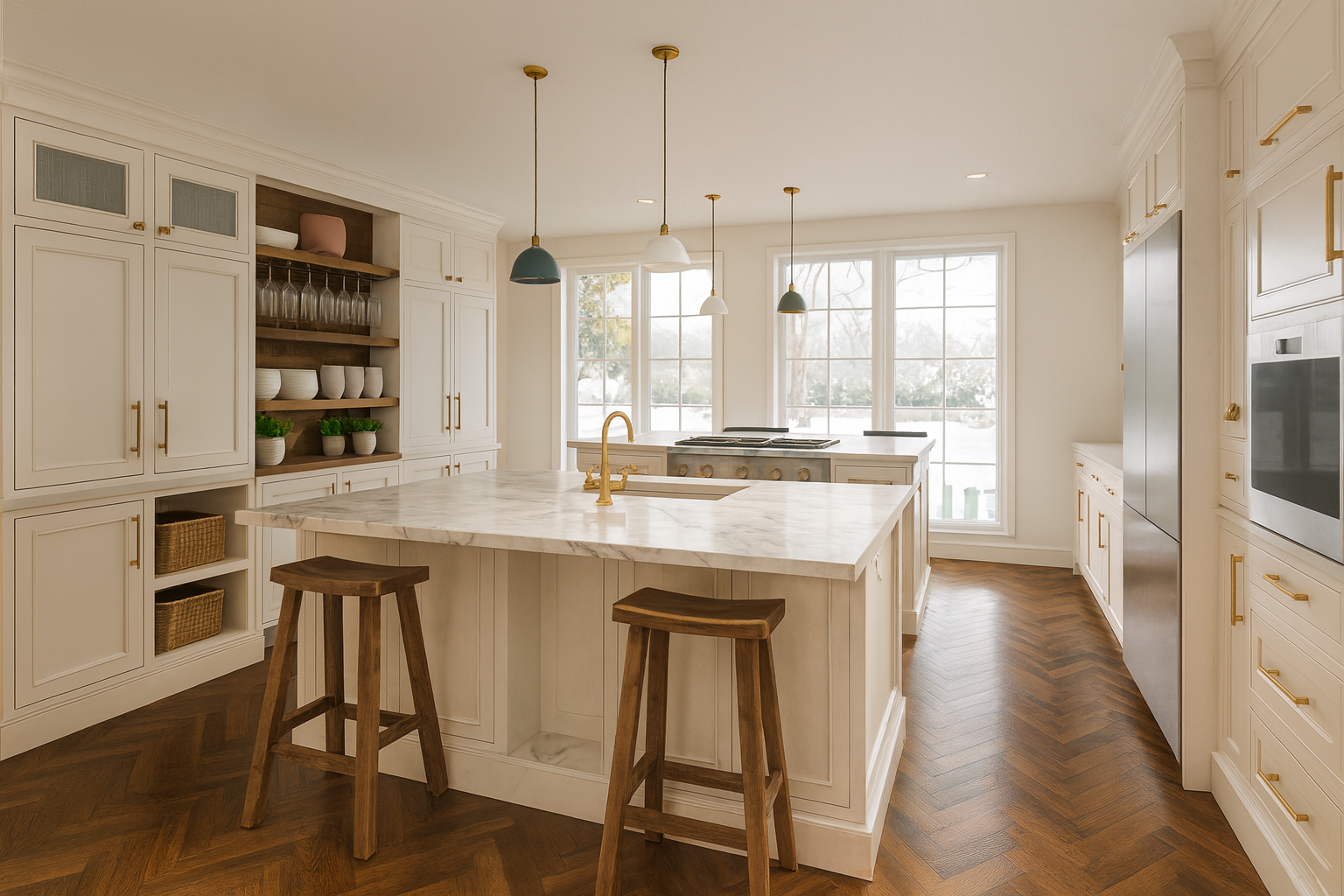
The kitchen is the heart of the home, its where everyone always wants to congregate and where most of us spend most of our time when at home.
For all these reasons, the kitchen is a major selling point for potential buyers, so, whether you are staying put or on the move, your kitchen is worth investing in, and this means starting with great design!
When planning your kitchen lay-out you should first consider:
Use the tried and tested design tip of having your sink / oven / fridge placed in a working triangle within your kitchen – this not only gives the kitchen great usability, but is also a very good starting point for planning your kitchen layout.
Think about the overall look you want to achieve – then think will that work with the rest of the house. Harmonious design is the easiest to live with and the most saleable – so whatever style you go for keep it consistent throughout!
Also think carefully about the overall budget spend – try to match the spend to your existing home value and finish. There is no point breaking the bank with a high-end luxury kitchen in a starter home – an entry level kitchen would be better suited. Equally, if you live in a Country Estate home then your kitchen budget ought to allow for bespoke design to suit the overall value of your home!
Design & Colour Trends come and go, and can quickly date a kitchen, instantly making it less appealing and reducing value add.
Making wise choices now can easily future proof your investment allowing you to adapt your kitchen to the current look.
Choose simple classic cabinetry in a painted finish – a future lick of paint in a new colour will keep your kitchen up-to-date!
Use a Cupboard Knob rather than a handle – these fix using one screw hole, meaning your door furniture can easily be switched up to give your kitchen a different look.
Choose your units & work surfaces in complimentary neutrals, instead adding colour/pattern with accessories – these are far less expensive to change with the current trends. E.g. add that pop of pattern with a rug rather than permanent flooring, so that when the bold pattern trend disappears, (and it really will), you won’t be stuck with a dating kitchen.
Some appliances should be seen and not heard while others should be kept out of sight and mind!
Show piece appliances such as oven, hob, range, sink, feature fridges should be given centre stage in your design and layout, whilst wallflower appliances such as washing machine, tumble dryer, dishwasher, fridge/freezer should definitely be kept behind closed doors!
Choose carefully when looking at appliances considering all practicalities, for example:
Don’t forget the bins! In our modern age of separated waste, bins are a big consideration – most households now have 3-4 different kinds of rubbish and recycling to consider, and most of us don’t want it on display!
There are lots of in cupboard bin solutions available, so shop around and consider what works for you and your household, in particular the volume of waste – no one ever like taking the bins out, so make sure they are big enough for your needs!
Use a pull out double or triple bin cupboard for general waste and recycling/glass, (you’ll need a 500mm cupboard for a double and a 600mm cupboard for a triple), and add a smaller pop up lid ‘back of the cupboard door’ bin under your sink for food and composting waste.
If designing your kitchen yourself feels a step too far, then please give us a call on 01202 232423 as we’d love to help! As an added bonus Studio Arkell is currently offering a FREE 1 Hour Initial Design Consultation! What have you got to lose?
Recent Posts

Built with
We can also assist with interiors specifications — for example, kitchen layouts, bespoke joinery, finishes, and fittings.
We can prepare a tailored quote based on the level of detail and input you’d like from us. The more information we specify upfront together, the smoother the build process will be, and the more accurate your contractor’s costings will be, helping to avoid unexpected costs.
This scope would be agreed under a fixed fee.
If the proposed scheme is particularly large, complex, or potentially contentious, we may recommend submitting a pre-application enquiry to the local planning authority before proceeding with a full planning application. This can help clarify requirements, identify potential issues early, and improve the chances of a successful outcome.
This scope would be agreed under a fixed fee.
After planning approval, the final stage is Technical Design, where we create detailed Building Regulation Drawings (BREGs).
A few important notes:
You’ll need Building Control sign-off for the build. This can be done through the local authority or privately, with fees paid directly to Building Control.
We can introduce you to trusted local structural engineers, or we’re happy to collaborate with any chartered engineer of your choice. Their fees are separate and payable directly to them.
We can also introduce you to reputable builders we regularly work with, if needed.
Our fees are split into two payments: 50% upon instruction and 50% upon issue of the drawings to Building Control.
Once you’re happy with the proposed design, we’ll prepare your planning application pack.
A typical planning submission includes:
Location & Block Plan
Existing Plans & Elevations
Proposed Plans & Elevations (including coloured elevations)
Proposed Site Plan
Design & Access Statement
We’ll handle the submission on your behalf and liaise with the council throughout, keeping you updated every step of the way.
Our fees are split into two payments: 50% upon instruction and 50% upon submission of the application.
This is the exciting part — shaping a design that’s perfectly suited to you.
After our initial consultation, we’ve prepared a brief and a list of drawing deliverables. Here’s how this stage works: We start with a site survey to produce accurate existing plans and elevations. We then develop proposed design drawings based on the agreed brief. Once ready, we’ll invite you to our office for a design review. We’ll refine the design based on your feedback and issue a final drawing pack for you to sign off. Our fees are split into two payments: 50% upon instruction and 50% upon issue of the drawings.