Setting up Practice
Following on in this series on how to get started in business – this week we want to take a look at your Social Media presence.
Back when you were getting ready to start your business we recommended that you secure your chosen name across all the Social Media platforms that were a match for your business, these might include some or all of the top 7 in 2020:
*Use an app such as IFTTT (If This Then That) to repost your content to multiple sites and save yourself time!
There’s mixed opinion on how much of a presence you should have on social media, the general rule of thumb is that its better to be on one or two platforms with really good & regular content, than to spread yourself too thin – after all, although these platforms provide a fabulous, free billboard, you still need to factor in your time!
Remember that each platform needs a slightly different approach when posting, so one post doesn’t necessarily fit all!
Once you’ve decided where is the best fit for you and your business, you need to do a good bit of background research and make a plan of how often and when to launch your posts.
There’s nothing worse than carefully curating some wonderful content, only to see it languish for want of impressions & engagement, just because you posted it at 10am Wednesday, when actually 6pm Thursday would be optimal for your audience and line of work! These times will likely vary for different businesses, audiences and for each of the platforms.
Social Media is run by Algorithms – broadly they all reward invisible brownie points to those who follow a regular posting routine, who engage across their whole platform, who post varied content, who use great, well edited images & who change up their use and number of hashtags. The more the algorithm likes and understands who you are and what you do, then generally, the more it will reward and promote you!
Recent Posts

Built with
We can also assist with interiors specifications — for example, kitchen layouts, bespoke joinery, finishes, and fittings.
We can prepare a tailored quote based on the level of detail and input you’d like from us. The more information we specify upfront together, the smoother the build process will be, and the more accurate your contractor’s costings will be, helping to avoid unexpected costs.
This scope would be agreed under a fixed fee.
If the proposed scheme is particularly large, complex, or potentially contentious, we may recommend submitting a pre-application enquiry to the local planning authority before proceeding with a full planning application. This can help clarify requirements, identify potential issues early, and improve the chances of a successful outcome.
This scope would be agreed under a fixed fee.
After planning approval, the final stage is Technical Design, where we create detailed Building Regulation Drawings (BREGs).
A few important notes:
You’ll need Building Control sign-off for the build. This can be done through the local authority or privately, with fees paid directly to Building Control.
We can introduce you to trusted local structural engineers, or we’re happy to collaborate with any chartered engineer of your choice. Their fees are separate and payable directly to them.
We can also introduce you to reputable builders we regularly work with, if needed.
Our fees are split into two payments: 50% upon instruction and 50% upon issue of the drawings to Building Control.
Once you’re happy with the proposed design, we’ll prepare your planning application pack.
A typical planning submission includes:
Location & Block Plan
Existing Plans & Elevations
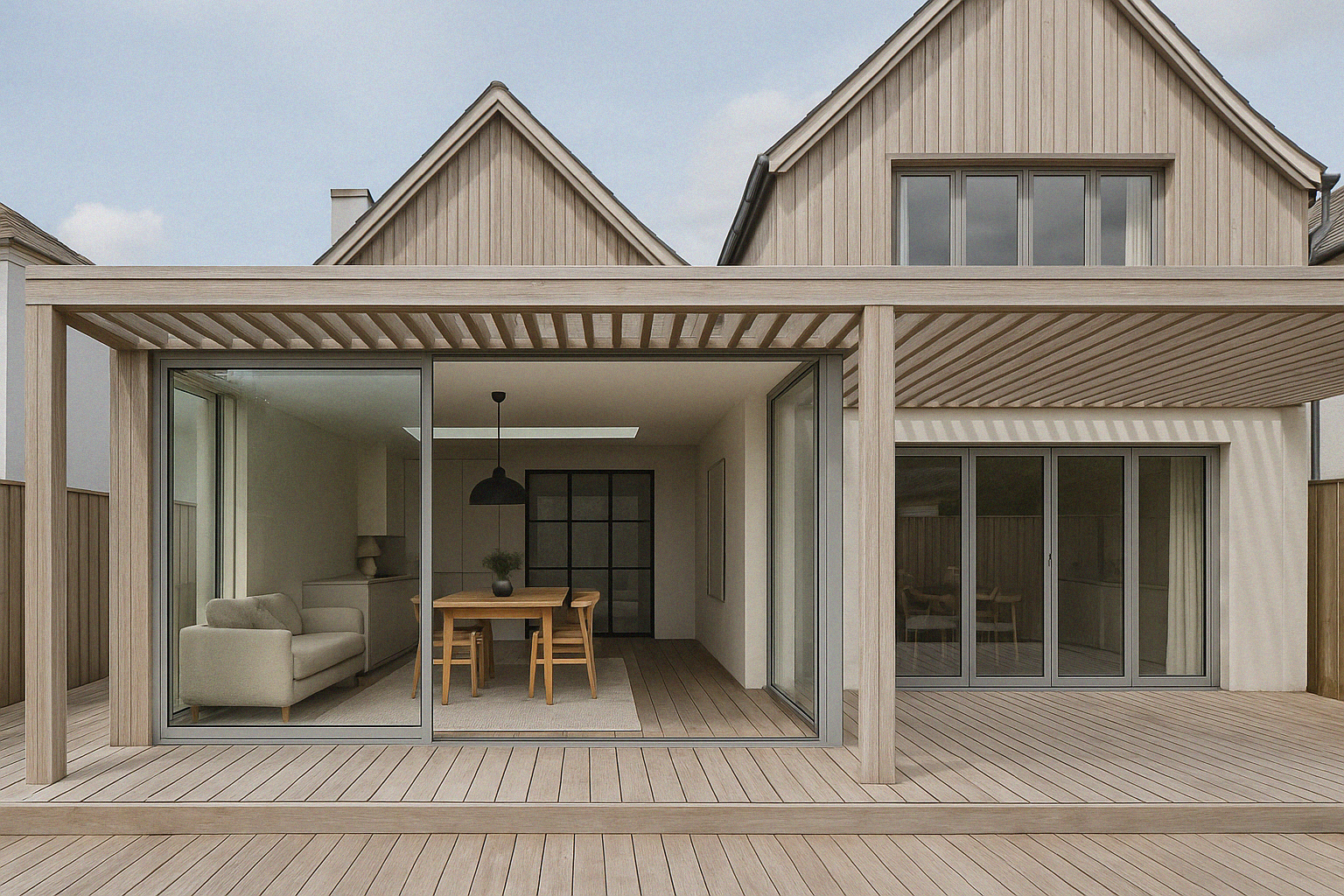
Proposed Plans & Elevations (including coloured elevations)
Proposed Site Plan
Design & Access Statement
We’ll handle the submission on your behalf and liaise with the council throughout, keeping you updated every step of the way.
Our fees are split into two payments: 50% upon instruction and 50% upon submission of the application.
This is the exciting part — shaping a design that’s perfectly suited to you.
After our initial consultation, we’ve prepared a brief and a list of drawing deliverables. Here’s how this stage works: We start with a site survey to produce accurate existing plans and elevations. We then develop proposed design drawings based on the agreed brief. Once ready, we’ll invite you to our office for a design review. We’ll refine the design based on your feedback and issue a final drawing pack for you to sign off. Our fees are split into two payments: 50% upon instruction and 50% upon issue of the drawings.