Launching a Business
Starting up a business on your own can be daunting even if its your dream or passion – we should know because its exactly what we’ve been through!
To save you some precious time, money and stress, we are sharing our top tips for setting up and launching your start up over a series of weekly articles:
What you call your business is so important, and if you have your heart set on a particular name, even if you’re just thinking about setting up, make sure your name of choice is available for all the following:
Before you finally decide on your business name, Google it to see what else comes up. If there is something very similar in your field of work already you might want to rethink!
You need to decide up front whether your business will be just you as a Sole Trader, more than one of you as a Partnership, or a legal entity in itself as a Limited Company. We would definitely recommend seeking some independent advice on this matter as there are a number of legal and financial implications to consider whichever route you choose, and well informed planning before you begin will give you the right basis and structure to grow and thrive.
Lots of professional firms will give a complimentary initial consultation in order to have you as a client in the future, so its well worth researching a list of pertinent questions to get the most out of one of these meetings.
Rather than appointing a professional firm to incorporate your new company you can do it yourself at a fraction of the cost using a website such as Rapid Formations.
Definitely take time to develop a clear, concise logo – you want to be recognisable at a glance whatever size or type your business.
Think about colour schemes, fonts, shapes etc – look at other logo’s you like and identify with. Roughly sketch ideas. Run all this pass anyone who will take a look and get their ideas too. Then, and only then, employ a designer to bring this all to life. This may be an expense, but your logo is both your shop front and signature, becoming your recognisable brand, and is worth investing in.
Get your designer to send your finished logo in a number of formats and ready resized to fit social media headers etc.
A good website is an essential shop window for any business and takes time to curate – its therefore a very good idea to give this lots of thought and input prior to launch. Definitely look at lots of websites for layouts you like and ideas for your own site.
Good websites aren’t fixed forever, but evolve and grow with your business, so at first, to save costs, its vital to choose a platform that is user friendly, allowing you to make image and text changes yourself to keep your website fresh and up to date.
Take time now to collect plenty of high-res images for your site, get ahead by planning your site map and create lots of value laden content – then when your web designer presents you with the skeleton site, you will be able to get it populated with relevant information & images quickly.

Built with
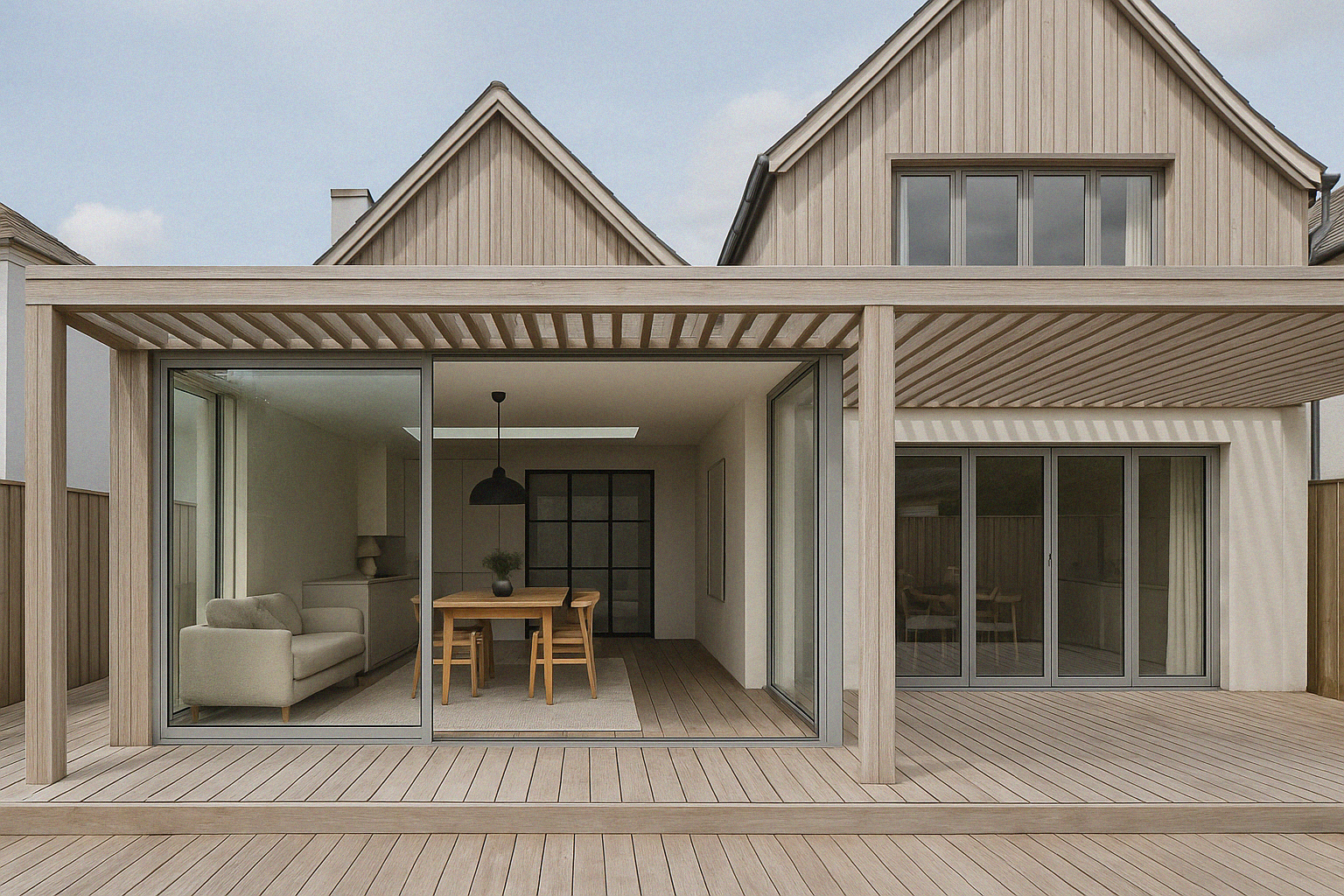
We can also assist with interiors specifications — for example, kitchen layouts, bespoke joinery, finishes, and fittings.
We can prepare a tailored quote based on the level of detail and input you’d like from us. The more information we specify upfront together, the smoother the build process will be, and the more accurate your contractor’s costings will be, helping to avoid unexpected costs.
This scope would be agreed under a fixed fee.
If the proposed scheme is particularly large, complex, or potentially contentious, we may recommend submitting a pre-application enquiry to the local planning authority before proceeding with a full planning application. This can help clarify requirements, identify potential issues early, and improve the chances of a successful outcome.
This scope would be agreed under a fixed fee.
After planning approval, the final stage is Technical Design, where we create detailed Building Regulation Drawings (BREGs).
A few important notes:
You’ll need Building Control sign-off for the build. This can be done through the local authority or privately, with fees paid directly to Building Control.
We can introduce you to trusted local structural engineers, or we’re happy to collaborate with any chartered engineer of your choice. Their fees are separate and payable directly to them.
We can also introduce you to reputable builders we regularly work with, if needed.
Our fees are split into two payments: 50% upon instruction and 50% upon issue of the drawings to Building Control.
Once you’re happy with the proposed design, we’ll prepare your planning application pack.
A typical planning submission includes:
Location & Block Plan
Existing Plans & Elevations
Proposed Plans & Elevations (including coloured elevations)
Proposed Site Plan
Design & Access Statement
We’ll handle the submission on your behalf and liaise with the council throughout, keeping you updated every step of the way.
Our fees are split into two payments: 50% upon instruction and 50% upon submission of the application.
This is the exciting part — shaping a design that’s perfectly suited to you.
After our initial consultation, we’ve prepared a brief and a list of drawing deliverables. Here’s how this stage works: We start with a site survey to produce accurate existing plans and elevations. We then develop proposed design drawings based on the agreed brief. Once ready, we’ll invite you to our office for a design review. We’ll refine the design based on your feedback and issue a final drawing pack for you to sign off. Our fees are split into two payments: 50% upon instruction and 50% upon issue of the drawings.