Setting up Practice
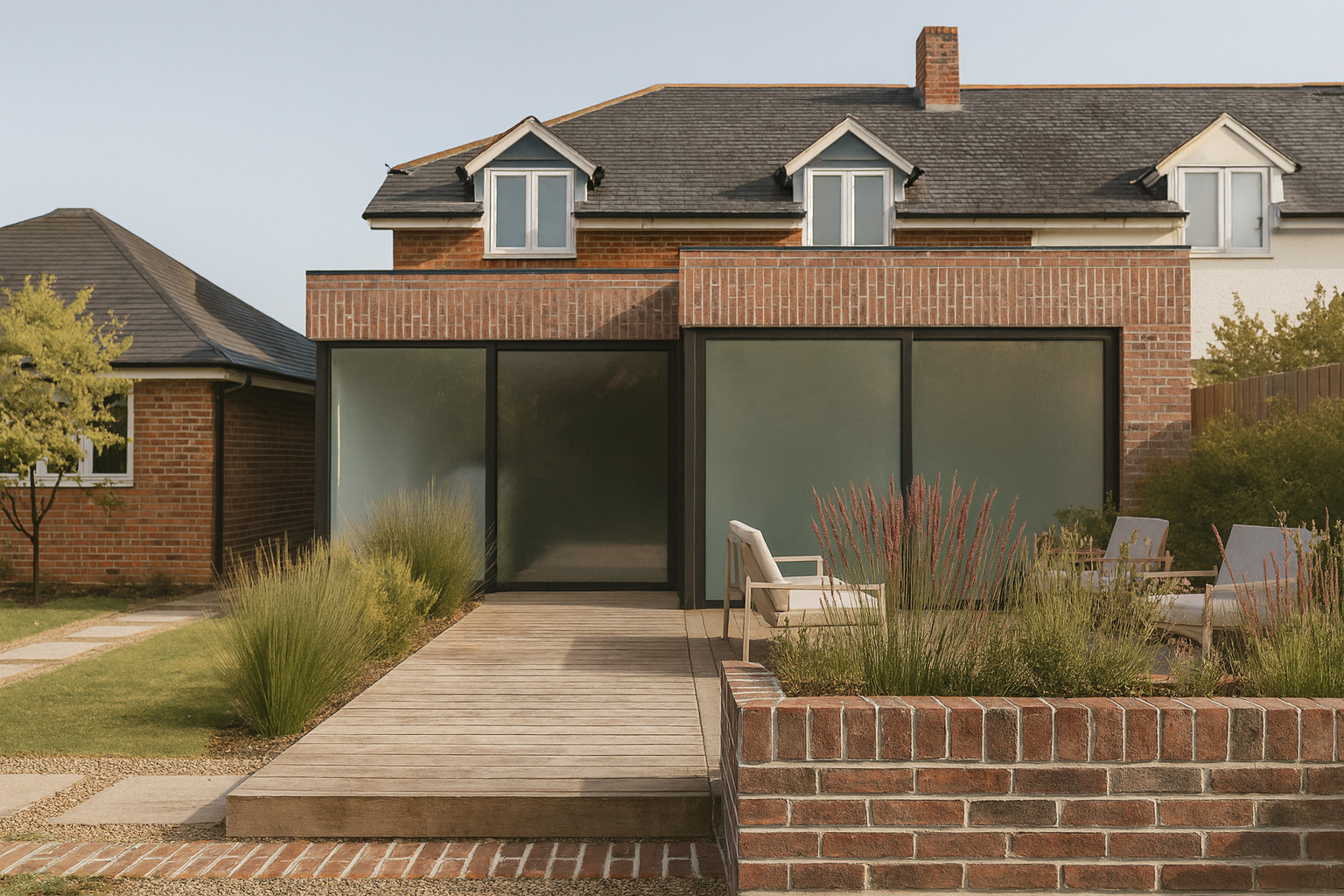
So, you know you want to extend / reconfigure / add to your home – what now?
The big question is – do you need to seek planning permission?
You may be surprised to find out that a good number of popular home improvements fall under the banner of ‘Permitted Development’, meaning that you can proceed with your works without a planning application.
Some of the works that are included under permitted development, subject to size & scale, location & proximity to neighbours and pre-existing modifications and/or additions that may have already been made to your home, are:
There are easy to understand mini guides for each of these available online on The Planning Portal that fully explain the circumstances in which you can build without planning permission under Permitted Development guidelines.
If you are stuck or are not sure whether your plans fall into this category, Studio Arkell’s experienced team are here and happy to help!
If your plans fall outside of permitted development, then a Planning Application will be necessary.
You might decide at this stage to put a ‘toe in the water’ and see if you application is along the right lines to aid approval – guidance on your application from the planners can be sought by entering into Pre Application Planning Advice. This is an advisory service and broadly free of charge for Householder Applications.
A straightforward Householder Application Pack would usually include the following documents:
The above lists the basic requirements for any Planning Application, but depending on the proposals, location and circumstances of your property, other supporting documents may also be required, which are usually obtained through an Architect and Specialist Consultants.
Your application may require:
If your property is situated within a Conservation Area, or is either Grade I or II Listed, additional documentation would be likely to be required for any Planning Application, along with consultation with Local Authority Conservation and Heritage Officers, as well as Specialist Consultants.
Studio Arkell can help with your Planning Application, from giving advice through to preparing and managing the entire application process.
Householder Applications for extensions and garden buildings currently cost £206*, whereas, detailed, outline or full applications for a new house build or conversion are £462*, (for outline applications this fee applies to each 0.1 hectare).
Sometimes, planning is given with Conditions attached, in which case submissions to request permission for the details to fulfill the conditions are currently £116*, and for Householder applications £34*. Multiple conditions can be addressed in a single application.
If you choose to submit your application online through the Planning Portal, then an additional £20* processing fee applies.
Studio Arkell is happy to guide you through the process to ensure that the correct application is submitted, and the right fee enclosed!
*Costs at BCP Council, 2020
Sometimes a straightforward planning approval is not given and sometimes planning is refused!
However, this does not mean the end of your Planning Application. Any of the following might happen during the planning process:
Now what?
Once you have gone through the full planning process and received permission for your proposed plans, you are free to start organising the build. (You will be notified by letter of the decision to approve or refuse planning).
Alternatively, you may want to wait a while, but bear in mind that your planning permission has a shelf life!
Generally, you must commence the build process within three years from the date the permission to build was granted, (unless your permission states differently). If you haven’t started work by the expiry date, then you’ll probably need to reapply.
Next, you’ll need to ensure that you have Buildings Regulations Approval.
You will need this for any of the following types of works, including works allowed under permitted development:
You can apply for Building Regulation approval and appoint an Inspector to monitor the works either through your Local Authority Building Control (LABC) or by appointing a Private Approved Building Inspection service.
There are three types of Building Regulation applications as follows:
Here at Studio Arkell we can advise and help you through this process, provide technical, detail & construction drawings for Full Plan Applications and for the build process or manage the Building Regulation process from start to finish.
If you’d like any assistance in negotiating your way from design concept, through planning and Building Regulations and onward to the build, then please contact Studio Arkell – we can help!
Recent Posts

Built with
We can also assist with interiors specifications — for example, kitchen layouts, bespoke joinery, finishes, and fittings.
We can prepare a tailored quote based on the level of detail and input you’d like from us. The more information we specify upfront together, the smoother the build process will be, and the more accurate your contractor’s costings will be, helping to avoid unexpected costs.
This scope would be agreed under a fixed fee.
If the proposed scheme is particularly large, complex, or potentially contentious, we may recommend submitting a pre-application enquiry to the local planning authority before proceeding with a full planning application. This can help clarify requirements, identify potential issues early, and improve the chances of a successful outcome.
This scope would be agreed under a fixed fee.
After planning approval, the final stage is Technical Design, where we create detailed Building Regulation Drawings (BREGs).
A few important notes:
You’ll need Building Control sign-off for the build. This can be done through the local authority or privately, with fees paid directly to Building Control.
We can introduce you to trusted local structural engineers, or we’re happy to collaborate with any chartered engineer of your choice. Their fees are separate and payable directly to them.
We can also introduce you to reputable builders we regularly work with, if needed.
Our fees are split into two payments: 50% upon instruction and 50% upon issue of the drawings to Building Control.
Once you’re happy with the proposed design, we’ll prepare your planning application pack.
A typical planning submission includes:
Location & Block Plan
Existing Plans & Elevations
Proposed Plans & Elevations (including coloured elevations)
Proposed Site Plan
Design & Access Statement
We’ll handle the submission on your behalf and liaise with the council throughout, keeping you updated every step of the way.
Our fees are split into two payments: 50% upon instruction and 50% upon submission of the application.
This is the exciting part — shaping a design that’s perfectly suited to you.
After our initial consultation, we’ve prepared a brief and a list of drawing deliverables. Here’s how this stage works: We start with a site survey to produce accurate existing plans and elevations. We then develop proposed design drawings based on the agreed brief. Once ready, we’ll invite you to our office for a design review. We’ll refine the design based on your feedback and issue a final drawing pack for you to sign off. Our fees are split into two payments: 50% upon instruction and 50% upon issue of the drawings.